Office Chairs: Your Back Will Thank You
Invest in your health with office chairs designed by experts to prevent back pain and improve posture...
12 min

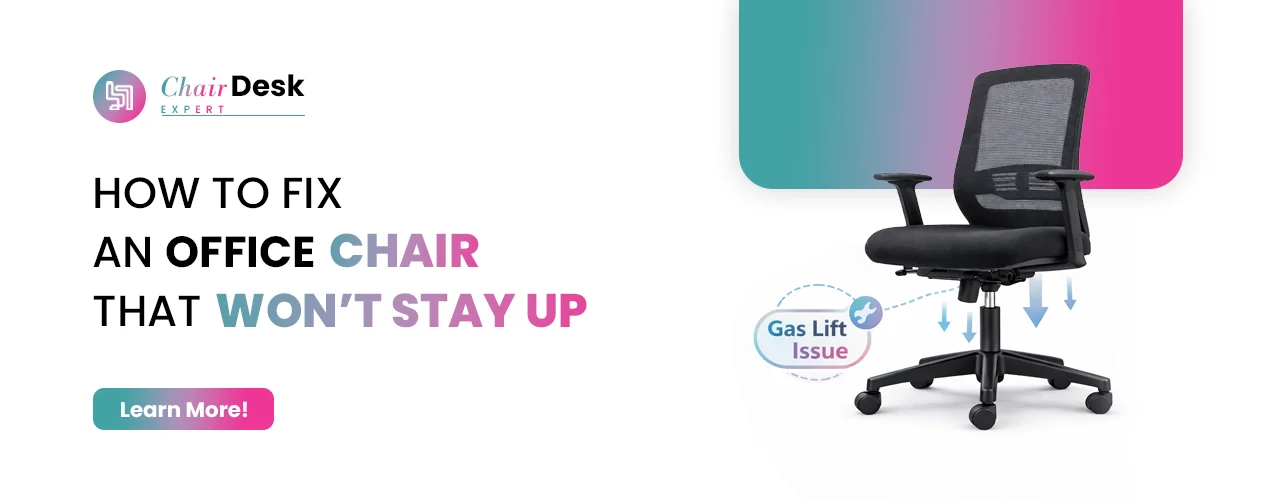
Are you tired of constantly adjusting your office chair’s height during the workday? It can be incredibly frustrating, but worry not! Our comprehensive step-by-step guide on How to fix an office chair that won’t stay up has arrived to rescue you.
We’ll show you an easy and effective solution to ensure your chair stays up, eliminating the annoyance of a sinking chair.
Say goodbye to the distraction and discomfort of readjusting your chair and enjoy a more productive and hassle-free work environment.
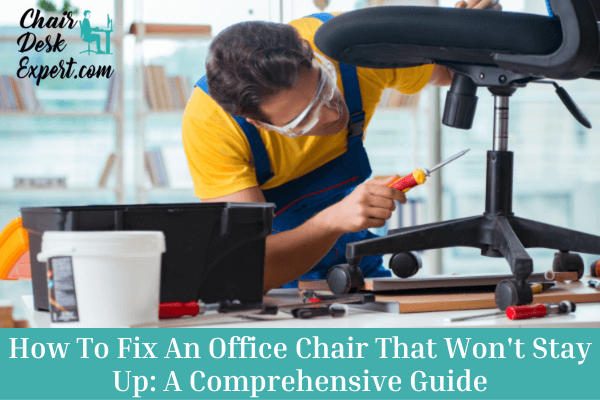
Read our comprehensive guide on How to Fix an Office Chair That Won’t Stay Up and find easy solutions to the problem.
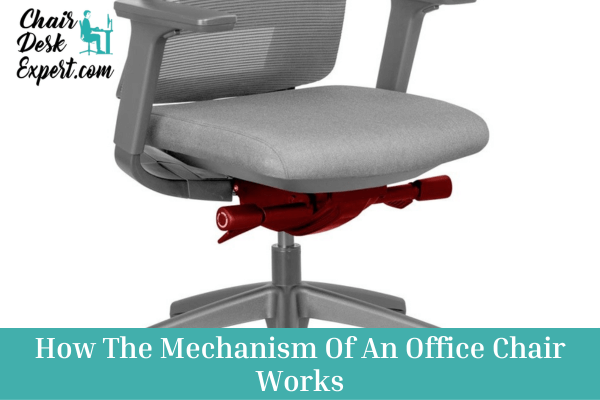
Understanding the mechanism of an office chair is crucial for fixing issues. A chair with height adjustment operates on a pneumatic cylinder, utilizing compressed air pressure.
The height adjustment valve, a key component, regulates seat height. When standing up with no load on the seat, the valve opens, allowing air to move upward, raising the seat.
Conversely, if there’s a load when the valve opens, air moves downward, causing the chair to lower. Familiarizing yourself with this principle enables effective troubleshooting and repairs.
Understanding why your chair keeps lowering is crucial for effective repairs. The most common cause is pressure weakening inside the piston mechanism, often due to nitrogen leakage.
Over time, this may happen due to excessive load, abrupt seating, or natural wear and tear on machine parts. The maximum allowable load is typically around 300 pounds.
Fixing a broken cylinder at home is not feasible, as it involves factory-filled compressed gas. The practical options are to replace the cylinder or set the chair at a fixed height, with the former being the preferred solution.
It’s crucial to note that attempting a DIY repair on a broken chair cylinder is not feasible. The cylinder, filled with compressed gas (nitrogen) during manufacturing, cannot be refilled at home.
You can replace the cylinder or secure the chair at a fixed height as a practical solution. Generally, replacing the cylinder is the preferred and more effective option.
Opting to replace the office chair gas lift is the most effective solution to resolve the issue of a sinking chair fully. Follow these steps for a successful cylinder replacement:
If you prefer a more straightforward fix that maintains the chair at a fixed height, consider installing a Saver Kit. This kit ensures the chair stays at your desired height by adding spacers to support the seat.
Attach enough rings onto the piston to maintain the desired height. The spacers bear the body’s weight, offering comfort. Additionally, keep spare rings on hand for easy replacement if needed.
If your office chair won’t stay up, here’s a simple method using a hose clamp. Follow these steps:
If this method doesn’t resolve the issue and your chair still won’t stay up, alternative solutions exist.
If you’re dealing with a sinking office chair, consider using a PVC pipe for added support. Follow these steps for an effective solution:
Remove the plastic cover from the chair’s metal cylinder and use a ruler to estimate its diameter. Exact measurement is not crucial, but you can work it out if desired.
Procure a PVC pipe with a diameter similar to the chair’s cylinder. Ensure it is long enough to cover the entire length of the chair, from the wheelbase to the seat.
Two installation options are available. You can either saw the PVC pipe lengthwise to create a slit for snapping onto the chair cylinder, remembering to wear a mask during cutting. Alternatively, remove the chair base and slide the pipe onto the cylinder.
To increase the chair’s height, raise it and add more PVC pipe. This prevents the chair from lowering and addresses the issue.
Test the chair to verify the PVC pipe’s effectiveness. It should act similarly to a hose clamp, preventing the chair from lowering to an uncomfortable height.
If the problem persists, investing in a new office chair from Furniture At Work might be a worthwhile consideration, given their fantastic range suitable for various professional environments.
If you’ve faced the need to replace your office chair’s gas lift, consider these tips to prolong the piston’s life:
Minimize frequent changes in seat height; find an optimal position when possible.
Following these guidelines doesn’t guarantee decades of chair life but can extend its durability. Now you’re familiar with How to fix an office chair that won’t stay up.
While fixing your office chair offers cost savings and a speedy solution, success is only possible in extreme situations.
This article outlines ways to address a sinking desk chair, often caused by gas lift depressurization. Replacing the piston is the most effective solution, ensuring proper height adjustment.
Temporary fixes, such as using a hose and tape, don’t provide adjustable height. Opting for gas lift replacement is a straightforward and practical choice. How to fix an office chair that won’t stay up? It is a simple task!
A: One standard solution is to use a hose clamp. It’s a quick, inexpensive fix that doesn’t require disassembling the chair. Alternative options include using a PVC pipe.
A: The common cause of a sinking office chair is a worn or broken seal in the pneumatic cylinder, which adjusts the chair’s height using pressure.
A: A faulty gas cylinder or lift mechanism is often the culprit. Consider replacing the gas cylinder or opt for a professional chair repair service.
A: Use quality wicking glue to reinforce tight joints, preventing movement without disassembling the chair. This is effective for certain chair joints.
Yes, many office chairs use a hydraulic system involving hydraulic fluid to adjust height and tilt. This system is often found in the chair’s cylinder, where the hydraulic fluid facilitates smooth movements and adjustments.
Expert reviews, guides, and insights for your perfect setup