Office Chairs: Your Back Will Thank You
Invest in your health with office chairs designed by experts to prevent back pain and improve posture...
12 min

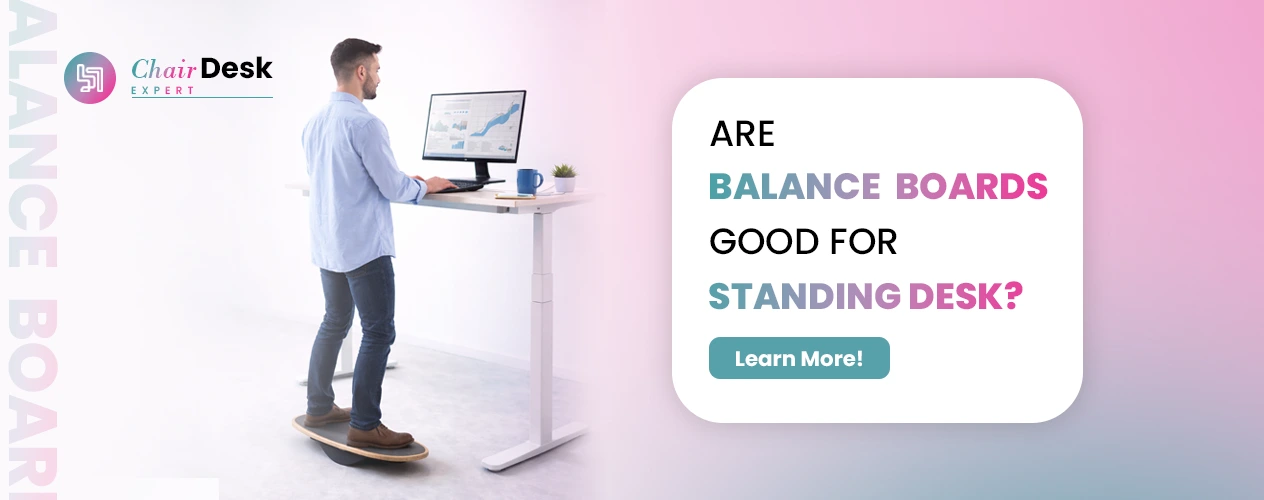
Many individuals have turned to standing desks as a solution in the search for a healthier and more dynamic workspace. Nonetheless, standing still for long periods can cause fatigue and discomfort. Meet the balance board – designed to keep you active and focused while working.
Balance boards are growing in popularity as an accompaniment to standing desks, and they promise improved posture, better core strength, and increased work rate. But do balance boards go well with standing desks? In this blog, let us look: Are balance boards good for standing desks?

Below we will discuss in detail are balance boards good for standing desks and its benefits.
This means that using a balance board when working increases energy expenditure compared to sitting or even just remaining stationary (at rest). In particular, the study found that using a balance board resulted in higher calorie burn per minute (1.48 kcal/min) compared to sitting (1.27 kcal/min) or standing still (1.42 kcal/min). The more calories one burns, the better one manages weight and improves general health.
Your oxygen consumption dramatically increases if you work on a balance board. Research showed that V˙O2 values were higher when using a balance board (3.92 mL·kg·min) compared to sitting (3.35 mL·kg·min) or lying down at rest (3.77 mL·kg·min). Over time, increased oxygen consumption indicates improved cardiovascular engagement, resulting in better heart health.
For instance, a balance board compels your body to engage various muscles, particularly those of your midsection and lower half, to maintain stability. This continuous tension strengthens these muscles, leading to good posture that decreases the risk of musculoskeletal disorders commonly noted with prolonged seating positions.
Sitting on a balance board elevates heart rates more than merely being seated does. According to the study results, heart rates were higher during standing (76 bpm) and riding using a balance board (76 bpm) than when individuals were seated (67 bpm). Increased heart rate signifies more physical activity, hence better cardiovascular health.
Importantly, there is no reduction in productivity when a balance board is used. The study measured words typed per minute, typing mistakes, and accuracy, finding no significant differences across sitting, standing, and balance board conditions. Therefore, you will be able to enjoy all the positive effects of having a balanced board while at the same time ensuring that your job is still done on time.
Alternating between sitting and standing and using a balance board may help minimize the fatigue and discomfort often experienced during prolonged static postures. Although tiredness increases in all cases, the dynamic nature of using a balance board can make standing periods feel more comfortable and less monotonous.
On the other hand, pain levels increased over time in all positions; however, this was faster when they used a balance board than continuously remaining in an upright posture. This means that micro-movements involved in balancing might be one way of managing discomforts rather than being stationary.
In short, using a wobble board at your stand-up desk can elevate your workday by increasing energy expenditure, optimizing muscle involvement, and sustaining productivity while effectively combating fatigue and pain. Therefore, it should be included in all ergonomic workplaces that aim to promote health.
In order to stay balanced on the board, you need to use your muscles all the time, especially the important core ones as they are weakened by sitting all day long. Consequently, constantly using a balance board will keep his core strong and remain upright.
Although standing is better than sitting, it can become tedious after a while, making you fidgety. However, with a balance board, standing becomes fun, which involves small movements that are good for exercise. It means you can move without leaving your desk or going to the gym.
The gentle movements of this kind of exercise activate muscles throughout the body without the danger of injury present in high-impact workouts. This feature makes it suitable for people of all ages and fitness levels.
You cannot fall asleep on a balance board because its movement keeps you awake and focused throughout the day. Simply standing still can get tiring, but moving about keeps you alert and engaged.
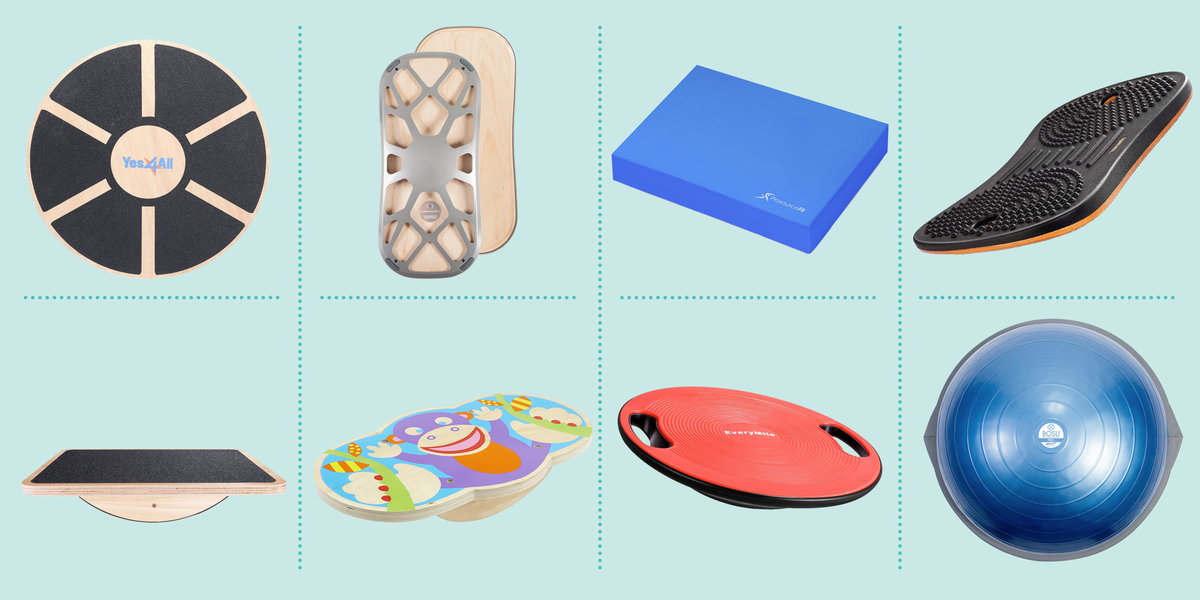
Balance boards come in several types that offer different ways to keep you active while standing upright or sitting. Let’s look at five basic kinds of balance boards:
These are simple.
These make rocker boards more challenging.
Thus, it provides greater degrees of freedom than any other form of exercise, even if we never expected this much flexibility before!
These balance boards are designed for the water environment and provide an exciting alternative to conventional balance training methods.
With so many available options, there’s bound to be a type that suits each person best among the numerous choices available on market shelves today. Whether you want better equilibrium skills, build up muscle frameworks, or simply make exercises more interesting, there must surely be some kind that would suit you perfectly !
Why not try out one now? You will be amazed by the incredible results you see with your own eyes!
https://www.youtube.com/watch?v=qlRz1Xwyfo8
Balance boards provide an inventive way of amplifying the advantages of standing desks by introducing these dynamic devices into your working space; you can incorporate movements, engage muscles and have a better posture while working at height. Here is how it should be done:
Before starting, spend some time becoming accustomed to the balance board. Try standing on one foot at a time to understand its motion and balance requirements.
Put your balance board onto an even surface near your desk where you work while standing. There has to be enough room around the board to move freely without any obstacles.
To begin with, step onto the balance board using one foot while holding it to your table or other nearby object for support. Slowly transfer your body weight and attempt not to lose balance.
After gaining more confidence, proceed to standing on both feet on top of the balance board; focus on maintaining equal weight distribution and engaging core muscles to stabilize yourself.
Once you become more confident in yourself, move from standing on one leg on the balance board’s surface to putting both legs together inside this tool. Take care to distribute body weights evenly and tighten stomach muscles for stability.
Make small moves, such as shifting from side to side or frontwards/backwards while balancing atop the wobble deck or swaying through gentle rocking motions, when trying out different movement concepts that activate various muscle groups, thus enhancing blood flow throughout the body.
Maintain an upright stance with shoulders pulled back and core engaged so that you don’t slouch or depend too much on this furniture for support.
Listen to your body and take breaks whenever you need to rest and stretch; alternating between standing on the board and standing directly on the floor can be helpful in case you are being taxed by balancing for a long time.
As you get comfortable with the balance board, find ways to challenge yourself with more intense movements. Deepen squats, lunges, or other balance exercises that stimulate muscles.
Consistency is crucial in benefiting from using a balance board at your stand-up desk; it pays off to include short sessions of b-board usage in daily activities geared toward regular movement and active involvement.
Similarly, by following these stages and adding a balance board to their workstations set up for standing desks like this one, they will be able to enjoy working more while staying healthy. Experiment with different techniques and movements to find what works best for you and enjoy the dynamic benefits of a balanced and active workspace.
Are balance boards good for standing desks? Balance boards can be a great addition to standing desks, offering numerous benefits such as improved posture, increased core strength, and enhanced overall balance. By engaging your muscles and promoting movement, balance boards can help reduce the discomfort and fatigue often associated with prolonged standing.
While they may not be suitable for everyone, especially those with balance issues or certain medical conditions, they can be an excellent tool for those looking to add a dynamic element to their work routine. Incorporating a balance board into your standing desk setup can contribute to a healthier, more active work environment.
A: One potential disadvantage of using a balance board is the risk of injury if not used properly. Because you need to adjust your body to maintain balance continuously, you can fall or strain muscles if you’re not careful. It’s essential to warm up before using a balance board and start with simple exercises, gradually progressing to more challenging ones as you become more comfortable and confident.
A: It’s recommended to start with balancing sessions of 10 to 20 minutes. This duration allows for good practice without putting excessive strain on your body.
A: Standing on a balance board offers numerous health benefits, including improved balance, posture, core strength, and rehabilitation support. Engaging muscles and promoting stability can also help prevent lower-body injuries.
A: Incorporating a balance board into your standing desk routine can aid in burning calories, potentially helping you burn nearly 100 calories each hour. This additional calorie burn contributes to your fitness goals and adds to the benefits of using a standing desk.
A: It’s recommended to start with balancing sessions of 10 to 20 minutes. This duration allows for good practice without putting excessive strain on your body.
A: Yes, using a balance board with a standing desk can enhance the health benefits of standing alone. The movement required to maintain balance on the board promotes blood circulation, engages muscles throughout the body, and contributes to overall heart health. Incorporating a balance board into your standing desk setup provides a comprehensive workout for your entire body.
Expert reviews, guides, and insights for your perfect setup